At Long Island Veneers, many people come to us looking for a better smile but feel unsure about where to start. Some want to correct crooked or gapped teeth, while others hope to achieve a brighter, more even appearance.
Veneers and braces both offer a path to lifelong confidence and oral health, yet they work in very different ways. Deciding which is the best choice for your needs requires you to look at your goals, lifestyle, and expectations.
This article gives you all the crucial details about veneers versus braces. You will learn about how each treatment works, who makes a good candidate, what results to expect, and how to plan your next steps.
Key Takeaways
How Veneers and Braces Work
People often ask how veneers and braces actually change a smile. Although patients sometimes see them as interchangeable solutions, each option fixes different problems through different methods.
Veneers Transform Teeth With a Custom Shell
Veneers use thin shells of porcelain or resin, which attach to the front-facing surfaces of the teeth. Our dentist carefully shapes each veneer to match your smile, concealing chips, stains, and mild crowding.
These shells reflect light like natural teeth and can dramatically improve color, size, minor alignment, and symmetry. Veneers do not move teeth into new positions. They only cover your natural tooth structure to create a cosmetic change.
Braces Move Teeth for Lasting Correction
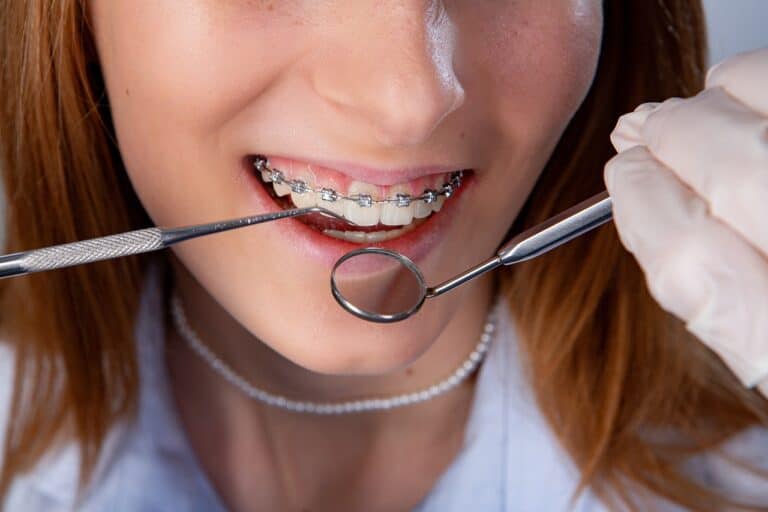
Braces use brackets and wires to gently shift teeth into new positions across your jaw. Over time, they treat crowding, gaps, overbites, underbites, crossbites, and rotated teeth.
Our orthodontist adjusts wires during regular appointments, which slowly move teeth within the bone. This process includes braces that stay on for 12 to 24 months for most patients, followed by a custom retainer.
Braces work as a structural solution. You gain a healthier bite and improved function (not just better appearance).
Types of Veneers and Braces
Patients have a range of choices for both cosmetic and orthodontic correction. The best type for you depends on your dental needs and your goals.
Types of Veneers
When comparing porcelain vs. composite veneers and other styles, most people at Long Island Veneers choose from these options:
- Porcelain Veneers: These are the most popular because they resist stains and look very natural. Porcelain offers strength and a translucent quality similar to enamel. Porcelain veneers last about 10 to 15 years with good care.
- Composite Resin Veneers: These cost less and require less tooth removal than porcelain. Composite veneers can chip more easily and do not usually last as long. Most composite veneers need replacement after about 5 to 7 years.
- No-Prep Veneers: No-prep versions involve only minimal tooth enamel removal or sometimes none at all. These work well for certain cosmetic issues but may not mask severely discolored or misaligned teeth.
Our dental team can help you select the style that will deliver your ideal smile.
Types of Braces
Braces now come in several styles, which give patients more control over appearance and comfort:
- Traditional Metal Braces: These remain the most common choice for major tooth movement. Stainless steel brackets bond to the teeth, and a wire attaches to each one. Adjustments happen every 4 to 6 weeks until teeth move into their desired position.
- Ceramic Braces: Ceramic brackets blend with tooth color. Many adults prefer ceramic braces in public or professional settings. These work very much like metal braces but can be more delicate.
- Lingual Braces: Lingual braces bond to the back of each tooth. This offers a discreet option, although adjustments and cleaning can be challenging.
- Clear Aligners: Clear aligners like Invisalign use removable trays that fit over the teeth. You swap out trays every 1 to 2 weeks to guide movement. Most clear aligners are best for mild or moderate correction.
No matter the style, our orthodontist can help you decide the best approach for you, taking into account severity and lifestyle needs.
Main Benefits of Veneers and Braces
Both veneers and braces aim to improve the look and function of your teeth, but they deliver different advantages. Your dental goals and expectations play a major role in what you should choose.
Benefits of Veneers
Porcelain veneers deliver rapid, visible upgrades in just two to three visits. Patients often leave our office with teeth that look straighter, brighter, and more even.
Veneers solve stains that do not respond to whitening and mask chips, cracks, and uneven edges. This makes them an easy way to change several issues at once.
For many adults, veneers save time compared to orthodontic treatment. You do not have to wait over a year to see results, and you skip regular tightening appointments.
Benefits of Braces
Braces result in a healthier bite alignment, which helps prevent uneven wear, jaw pain, and future dental problems. This treatment corrects serious crowding, spacing, and bite issues that veneers cannot address under the surface.
You receive a permanent change in tooth position and jaw structure. As long as you wear your retainer, your results can last a lifetime, and you gain better chewing ability and oral health.
Braces do not require removal of any healthy tooth enamel. This makes them an excellent choice for younger patients or those who do not want to change their natural teeth.
Candidacy: Who Should Choose Veneers or Braces?
Picking the right option means you need to match your needs and goals to what each procedure can accomplish. We look at a patient’s oral health, bite, cosmetic wishes, and personal situation.
Ideal Candidates for Veneers
At Long Island Veneers, we find veneers work best for patients with these characteristics:
- Minor crookedness, small gaps, or slight alignment issues (not severe cases)
- Discoloration, stains, or enamel defects that do not respond to whitening treatments
- Chipped, broken, or worn-down teeth needing cosmetic masking
- Healthy gums and enough enamel to support a veneer
- No severe bite or jaw alignment problems
You should keep in mind that veneers only enhance what is already there. They work as a mask and do not replace the function of orthodontics.
Ideal Candidates for Braces
Braces suit people who seek lasting correction for tooth position or bite. Good candidates include:
- Moderate to severe crowding, gaps, rotations, or malocclusions (such as overbites or underbites)
- Children or adults with growth-related alignment issues
- Patients who want improved bite, not just a cosmetic fix
- Those seeking a non-cosmetic solution that protects long-term dental health
Braces do not remove any enamel, so they are better for those with weak or thin enamel. Most doctors recommend children undergo their first orthodontic assessment at age 7.
People with extreme gum disease, cavities, or poorly maintained oral health may address those issues before starting with either option.
The Procedure Step by Step
It helps to know exactly what to expect from the process, start to finish. Here is a breakdown of what happens during each treatment.
Step-by-Step Process for Veneers
- Consultation and Planning: Our dentist or prosthodontist assesses your teeth, talks through your cosmetic goals, and may take digital scans or models.
- Tooth Preparation: The doctor removes about 0.5mm of enamel from the tooth front to make space for the veneer. This keeps the veneer looking thin and natural.
- Impressions and Temporary Veneers: We take impressions to guide custom fabrication. Temporary veneers cover prepared teeth until your permanent set arrives.
- Fitting Permanent Veneers: Our team bonds the custom, color-matched veneers to your teeth, adjusts for fit and bite, and makes sure the new smile looks seamless.
The veneer procedure usually only needs 2 to 3 office visits over three or four weeks.
Step-by-Step Process for Braces
- Orthodontic Consultation: Our orthodontist examines your bite and tooth alignment and takes X-rays, photographs, and 3D models to plan your treatment.
- Braces Placement: We attach brackets using dental cement and connect them with a wire, which starts tooth movement immediately.
- Periodic Adjustments: You visit our office every 4 to 6 weeks for wire changes and progress checks.
- Braces Removal: Once teeth reach their desired places (usually 12 to 24 months), we remove the brackets and polish your teeth.
- Retention: You receive a custom retainer to keep teeth from drifting, which you’ll wear nightly for the first year and then as needed afterward.
Braces require multiple visits and a longer timeline, but the changes last a lifetime when you care for your results.
Timeline and Recovery
Patients often want to know which treatment works faster and how comfortable the experience will be. The answer depends on your priorities.
Timeline for Veneers
You will see results in as little as two or three weeks after the first appointment. Veneer placement works quickly since it only involves shaping the tooth surface and bonding the porcelain.
There is little discomfort with veneer placement. Some people notice mild sensitivity for a few days after tooth preparation. Most resume normal meals and hygiene the same day.
Timeline for Braces
Braces work slower but correct structural problems. Full treatment runs from 12 to 24 months for most people, with periodic tightening visits.
Some pressure and mild soreness can occur after each adjustment, but over-the-counter pain relievers and a soft-food diet can help.
After braces removal, a retainer phase begins. Retainers must be worn nightly for the first year, then three to four nights per week for maintenance.
Comparing Results, Maintenance, and Longevity
Knowing what to expect after your treatment has a major effect on long-term satisfaction. Both options offer impressive results, but they age and wear differently.
Results and Smile Appearance
Veneers give dramatic energy to your smile almost instantly. You can expect even, white, and well-shaped teeth, which look more symmetrical and can make you look more confident.
Braces deliver a straighter, more functional bite. This means you not only enjoy a better look but also improved chewing, comfort, and oral health.
Maintenance Requirements
Porcelain veneers resist most stains, though learning how to clean veneers properly with regular brushing, flossing, and non-abrasive toothpaste helps extend their life.
Strong biting forces (like chewing on ice or pens) may damage veneers, so you should take care to avoid those activities.
Braces need careful cleaning around wires and brackets, as trapped food can increase cavity and gum risk. Some foods need to be avoided so that brackets or wires do not break.
After braces, wear your retainer nightly at first, then at least three to four nights per week. This keeps teeth from shifting.
Longevity and Replacement
Porcelain veneers last about 10 to 15 years before they may need replacement. Composite resin ones need more frequent updates (every 5 to 7 years).
Braces move teeth for good, but retainer wear is essential. If you stop wearing your retainer completely, teeth may drift back.
Veneers require some removal of enamel, so once you commit, you need to keep replacing them over time. Braces do not remove structure, and most people never need orthodontic care again.

Comparing Costs and Insurance
Many patients at Long Island Veneers want to know about budgets and insurance coverage before they make their decision.
Veneers: Cosmetic Investment
Veneers usually work as a cosmetic procedure. Most insurance plans do not cover their cost.
Pricing depends on material and the number of teeth treated. Porcelain often runs higher than composite resin but lasts longer.
You pay per tooth, so determining how many veneers you need helps you accurately estimate the investment for a full smile makeover.
Braces: Orthodontic Coverage
Most dental insurance plans include partial coverage for braces, especially in children under age 18.
Braces usually require one investment for all treated teeth, which can be more cost-effective for moderate or severe crowding.
Clear aligners or ceramic braces may carry extra fees. We will review your plan and offer options to fit your needs.
Our office can provide pre-treatment estimates and explain payment plans that make care accessible for you.
Pros and Cons: Choosing the Right Option
You can benefit from looking at each treatment’s main strengths and drawbacks. The right choice depends on your situation, not just on what looks fastest or simplest.
Pros of Veneers
- Fast Results: Most people see a smile transformation in just weeks.
- Simple Maintenance: Brushing and flossing are all it takes for most patients.
- Versatility: Improves color, shape, and gaps all at once.
- Stain Resistant: Porcelain is less likely to discolor from coffee or wine.
Cons of Veneers
- Irreversible: Enamel removal means you commit for life.
- Lifespan: Veneers need to be replaced after 10 to 15 years.
- Not for Severe Issues: They cannot fix major bite or alignment problems.
- Upfront Cost: Each tooth adds to your investment.
Pros of Braces
- Permanent Correction: Teeth position changes for life when you wear your retainer.
- Treats Structural Problems: Solves bite, jaw, and major crowding issues, not just the cosmetic ones.
- No Tooth Removal: Your enamel stays safe.
Cons of Braces
- Longer Timeline: Treatment usually takes 12 to 24 months.
- Diet Restrictions: Certain foods must be avoided to protect hardware.
- Visibility: Traditional braces can be more noticeable, although clear or lingual options offer alternatives.
- Adjustment Soreness: Mild pain can occur after tightening.
Your decision should match your dental health, how fast you want results, and how much change you wish to see.
How to Choose Between Veneers and Braces
Choosing the best path means looking at your smile goals, dental health, and what matters most to you. You can start by asking a few questions and consulting with an experienced dentist.
Key Factors to Weigh
- Nature of the Problem: If your teeth need structural correction for bite, function, or severe misalignment, braces work better. If you wish for surface improvement (color, chips, slight crookedness), veneers offer a faster choice.
- Age and Health: Adolescents and young adults still growing may benefit from orthodontic correction. Older adults with healthy gums looking for a cosmetic solution may favor veneers.
- Budget and Timeframe: Decide if you would rather achieve results quickly or invest in longer-term movement. Review insurance and payment options with our team.
- Lifestyle Preferences: Some jobs or social settings may influence your wish for subtlety in appearance. Clear aligners and ceramic braces work well for adults who want a more discreet option.
Booking a consultation at our Long Island office makes it easier to weigh your choices and plan the smile you want.
Start Your Smile Journey Today
Many patients never realize how much their smile can affect their confidence and comfort until they take the first step toward change. Veneers and braces each offer unique advantages, and the best choice depends on your dental health, goals, and lifestyle.
The experienced team at Long Island Veneers can walk you through the options, listen to your wishes, and help you understand what works best for your teeth. Whether you want rapid cosmetic change or need structural correction for lifelong oral health, you can trust us to guide you with honesty and care.
Take the first step now. Contact Long Island Veneers to schedule your personalized consultation and find out which option will help you achieve the smile you have always wanted.